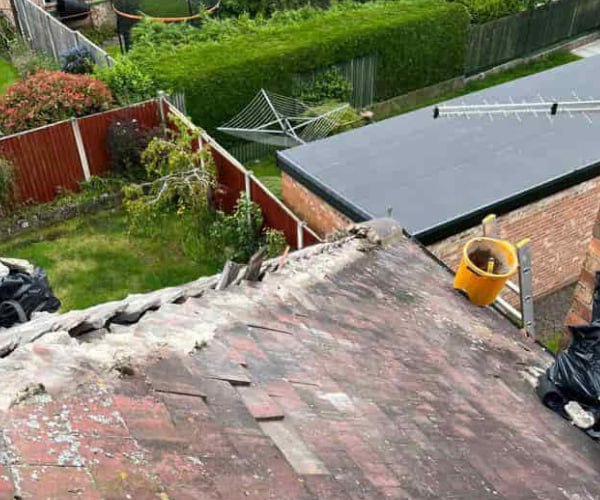
How Can You Tell If Roof Damage Is Starting to Spread?
Roof damage does not always remain confined to the place where it started. A cracked tile, deteriorating flashing or small area of water ingress may initially seem like an isolated problem, but continued exposure to the weather can allow moisture and deterioration to affect surrounding parts of the roofing system.
For homeowners in Bromham, Bedfordshire, recognising the signs that roof damage is spreading can make an important difference. Early professional attention can help identify the original fault, establish how far the problem has progressed and prevent otherwise sound parts of the roof from becoming affected.
Why Does Roof Damage Spread?
A roof is made up of several interconnected components rather than just the tiles or slates visible from outside. The covering, underlay, battens, flashing and supporting structure all contribute to keeping the property protected.
When one component fails, another may become exposed.
For example, a displaced tile can allow rainwater to reach the layers beneath it. If the problem remains unresolved, repeated moisture exposure may eventually affect a larger area.
The original defect may therefore be relatively small while the resulting damage becomes increasingly extensive.
1. Damp Patches Are Becoming Larger
One of the clearest warning signs is an internal damp patch that gradually increases in size.
A small mark on a ceiling may initially appear after particularly heavy rainfall. If it becomes larger or begins returning more frequently, moisture could be continuing to enter the roof.
Pay attention to:
- Expanding ceiling stains
- New discolouration around an existing mark
- Dampness spreading along walls
- Marks appearing after rainfall
- Changes in nearby plasterwork
The visible damp area may not be directly below the actual roofing defect, so professional investigation is important.
2. New Damp Areas Are Appearing Elsewhere
A single leak becoming more noticeable is one concern. New signs of moisture appearing in additional areas can suggest that the problem is no longer completely localised.
Water entering through one vulnerable point can sometimes travel along underlay, timbers or other surfaces before becoming visible.
Multiple damp areas do not necessarily mean there are several separate leaks. A thorough roof inspection is needed to understand how the moisture is entering and where it is travelling.
3. More Tiles or Slates Are Becoming Displaced
One slipped tile can often be an isolated defect. If neighbouring tiles begin moving, cracking or becoming loose, the affected section deserves closer attention.
This may indicate deterioration involving:
- Fixings
- Battens
- Adjacent roofing materials
- Ridge details
- The underlying roof structure
Repairing only the most obvious tile without checking the surrounding area could leave another developing weakness unnoticed.
4. The Loft Is Showing Signs of Moisture
The loft can provide valuable early indications of roofing problems because it sits directly beneath the roof structure.
Signs worth investigating include:
- Damp roof timbers
- Darkened areas on timber
- Wet or affected insulation
- Water marks beneath the roof covering
- Persistent musty conditions
Moisture within the loft should not be ignored simply because it has not yet reached the rooms below.
Identifying the problem at this stage may help prevent damage progressing further into the property.
5. Roofing Underlay May Be Affected
Underlay provides an important secondary layer beneath tiles or slates. It is not intended to compensate indefinitely for a defective external roof covering.
If water repeatedly reaches the underlay through broken, missing or displaced roofing materials, its condition may eventually deteriorate.
Because the underlay is largely hidden, problems are not always apparent from ground level. This is one reason a professional assessment can reveal considerably more than a simple visual check from outside.
6. Timber Components Are Being Exposed to Moisture
Roof timbers are intended to remain protected from persistent water ingress. When a leak continues for an extended period, moisture may begin reaching battens, rafters and other structural components.
This can turn what began as a problem with the external covering into a more significant roofing issue.
Early repair is valuable because stopping the water at its source helps protect the hidden structure beneath it.
7. The Same Repair Area Keeps Developing Problems
If the same part of the roof repeatedly requires attention, the original problem may extend beyond the component that has previously been repaired.
Recurring problems can indicate that:
- The true source has not been identified
- Surrounding materials have deteriorated
- Water is entering from another location
- Several components within the area need attention
Professional diagnosis should look at the complete affected section rather than repeatedly treating individual symptoms.
8. The Roofline or Surface Is Beginning to Look Uneven
Changes to the shape or alignment of a roof can warrant investigation.
From ground level, homeowners might notice:
- A section beginning to dip
- Uneven tile lines
- Changes around the ridge
- Areas that appear different from surrounding sections
There can be several reasons for visible movement, so it is important not to make assumptions. A professional inspection can determine whether the change is associated with the roofing materials, supporting structure or another issue.
9. Problems Become More Noticeable After Bad Weather
Existing weaknesses are often exposed during periods of heavy rain or strong wind.
A small opening that previously allowed little moisture through may become more problematic during driving rain. Similarly, roofing materials that are already loose can become increasingly vulnerable when exposed to strong winds.
If a roof develops new symptoms after poor weather, it is worth checking whether an existing defect has worsened.
Why Water Ingress Can Spread Beyond the Original Fault
Water does not necessarily travel vertically once it enters a roofing system.
It can follow:
- Roofing underlay
- Timber surfaces
- Roof slopes
- Junctions between materials
- Other available routes
Consequently, the internal signs of a leak may appear some distance from the actual entry point.
This is why locating the true source is such an important part of professional roof repair.
Small Defects Can Affect Surrounding Components
A roof is designed so that its individual parts work together. Once one component stops performing correctly, neighbouring materials may experience conditions they were not intended to withstand.
A broken tile, for example, may expose underlay. Continued moisture may then reach battens or timber components. Eventually, signs may become visible inside the property.
Stopping this progression is one of the main reasons early roofing repairs are so valuable.
When Is a Localised Roof Repair Still Possible?
Spreading damage does not automatically mean the entire roof needs replacing.
Where the problem has been identified relatively early and the surrounding roofing system remains in serviceable condition, targeted repairs may still provide an appropriate solution.
A professional assessment can establish:
- What caused the original problem
- Which materials have been affected
- Whether the damage remains localised
- The condition of surrounding areas
- What work is needed to restore protection
The extent of the repair should be determined by the roof’s actual condition rather than assumptions based only on what is visible.
Why Waiting Can Make Diagnosis More Complicated
As deterioration spreads, the original cause can become harder to distinguish from the secondary damage it has created.
Prompt investigation gives roofers a better opportunity to trace the problem while the evidence is relatively contained.
Early attention can also help preserve:
- Existing tiles or slates
- Roofing underlay
- Battens
- Structural timbers
- Loft insulation
- Internal ceilings and finishes
The objective is to stop a manageable roofing defect from influencing a much larger part of the property.
Professional Roof Inspections Make a Difference
Many important roofing components cannot be properly assessed from the ground.
Professional roofers can examine the relevant areas and consider how different signs relate to one another. Rather than simply replacing the first damaged tile they see, they can investigate whether surrounding components have also been affected.
This helps ensure repairs address the cause and extent of the problem instead of temporarily hiding the most obvious symptom.
Professional Roof Repairs in Bromham
At ATC Roofing Bromham, we provide professional roofing services throughout Bromham, Bedfordshire. If you have noticed signs that an existing roofing problem may be worsening, a careful assessment can establish what is happening and determine the appropriate repair.
Whether the issue involves damaged roofing materials, water ingress, flashing or deterioration within a particular section of the roof, our focus is on identifying the underlying fault and restoring reliable protection with high-quality workmanship.
Taking action while damage remains contained can help preserve more of the existing roof and reduce the likelihood of further deterioration.
Conclusion
Roof damage may be starting to spread if damp patches are becoming larger, additional areas are showing signs of moisture, neighbouring tiles are deteriorating or problems are appearing within the loft. Changes to the roofline and recurring defects in the same area can also indicate that closer investigation is needed.
The important point is that the visible symptom may represent only part of the problem. Water can travel away from its original entry point, while a small defect in the roof covering can eventually expose several underlying components.
For homeowners in Bromham, Bedfordshire, ATC Roofing Bromham provides professional roof inspections and repairs focused on finding the cause and understanding the extent of deterioration. If you have noticed changes in your roof or suspect an existing problem is getting worse, contact our team to arrange an assessment before the damage has an opportunity to spread further.
Call us on: 01234 982 391
Click here to find out more about ATC Roofing Bromham
Click here to complete our contact form and see how we can help with your roofing needs.